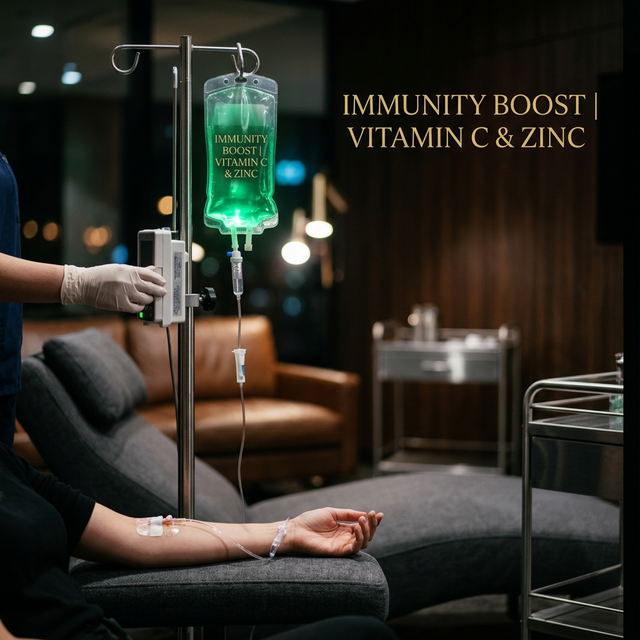
Immunity IV drips have become one of the most popular offerings at wellness clinics — particularly following the COVID-19 pandemic, which heightened public awareness of immune health in a way no wellness marketing campaign could replicate. From seasonal cold prevention to post-illness recovery to ongoing immune optimization, the claims are wide-ranging.
But what does the evidence actually support? This article takes a structured look at the claimed benefits of immunity IV drips — separating what is genuinely supported by clinical research from what is extrapolated, theoretical, or simply marketing language.
Disclaimer: This article is for educational purposes only. IV therapy is not FDA-approved for immune enhancement. Consult a licensed healthcare provider before pursuing any IV treatment.
What Is an Immunity IV Drip?
An immunity drip is an intravenous infusion formulated to support immune system function. The foundational formula most clinics build from is the Myers' Cocktail — developed by Dr. John Myers in Baltimore from the 1950s-1970s and retrospectively documented by Dr. Alan Gaby in a 2002 review in Alternative Medicine Review.
The core Myers' Cocktail contains:
- Magnesium chloride (200-500 mg)
- Calcium gluconate (100-200 mg)
- B-vitamin complex (B1, B2, B3, B5, B6)
- Vitamin B12 (1,000-5,000 mcg)
- Vitamin C (1,000-5,000 mg)
Modern immunity drips typically add to this foundation:
- Glutathione (600-2,400 mg) — master antioxidant
- Zinc (1-5 mg) — critical for immune cell function
- Selenium (50-200 mcg) — antioxidant enzyme cofactor
- Alpha-lipoic acid (300-600 mg) — antioxidant network support
- Amino acids (glutamine, lysine, arginine)
The core rationale for IV delivery: nutrients reach systemic circulation at concentrations that oral absorption, limited by GI transporter saturation, cannot achieve. This is pharmacologically documented for vitamin C — and is the strongest argument for the IV route.
The Pharmacokinetic Foundation: Why IV Delivery Matters for Vitamin C
The most compelling, rigorously established argument for IV immunity drips comes from NIH-funded pharmacokinetic research on vitamin C.
Dr. Mark Levine's team at the NIH published a series of studies (PNAS, Annals of Internal Medicine, 1996-2004) establishing definitively that:
- Oral vitamin C is absorbed by saturating GI transporters (SVCT1, SVCT2)
- Maximum plasma vitamin C from oral intake: ~70-85 micromolar (uM) regardless of dose
- IV vitamin C (50-100 g doses): plasma concentrations of 5,000-20,000+ uM — pharmacologically impossible orally
At these pharmacological plasma concentrations, vitamin C's immune mechanisms shift qualitatively — not just quantitatively. Pharmacological vitamin C generates extracellular hydrogen peroxide that is selectively toxic to pathogens and abnormal cells, while normal cells with adequate antioxidant enzymes remain protected.
This is the scientific foundation for all high-dose IV vitamin C applications — from immune support to cancer adjunctive care.
Immunity Drip Benefit #1: Rapid Correction of Immune-Critical Deficiencies
Evidence Level: Strong — Best-Supported Application
The most clearly validated benefit of immunity drips is the rapid correction of micronutrient deficiencies that directly impair immune function. IV delivery bypasses GI limitations that may be especially pronounced during illness (when gut absorption changes further).
Vitamin C deficiency and immunity: Vitamin C accumulates in neutrophils and lymphocytes at 10-100x plasma levels. It supports chemotaxis (immune cells migrating to infection sites), phagocytosis, and pathogen-killing capacity. Deficiency impairs all of these functions measurably.
Zinc deficiency and immunity: Zinc deficiency — affecting an estimated 17% of the global population — impairs thymulin production (T-cell maturation), NK cell cytotoxicity, dendritic cell function, and neutrophil activity. This is one of the best-documented nutrient-immunity links in nutritional science.
Magnesium and T-cell activation: A 2022 study in Cell demonstrated that low extracellular magnesium specifically impairs T-cell LFA-1 integrin activation — literally preventing T cells from forming the immunological synapses they need to kill target cells. Magnesium deficiency is widespread in Western populations.
For patients with documented deficiencies — due to malabsorption conditions (IBD, Crohn's, celiac), post-bariatric surgery, chronic alcoholism, cancer treatment — IV delivery provides genuinely superior deficiency correction compared to oral supplementation that their GI tract cannot reliably absorb.
Immunity Drip Benefit #2: Enhanced Antiviral Activity
Evidence Level: Moderate — Strongest for High-Dose Vitamin C
At pharmacological IV concentrations, multiple immunity drip ingredients demonstrate antiviral properties:
Vitamin C — antiviral at pharmacological concentrations: The pro-oxidant mechanism of pharmacological vitamin C (Fenton reaction → extracellular H2O2 generation) is selectively toxic to viruses. Zinc inhibits the RNA-dependent RNA polymerase (RdRp) in RNA viruses — including influenza, coronaviruses, and rhinoviruses — reducing their ability to replicate.
Clinical evidence:
- A 2019 meta-analysis in Nutrients (Carr & Maggini) confirmed vitamin C reduces URTI duration and severity, with 50% cold incidence reduction in highly stressed populations (military recruits, marathon runners)
- Cochrane reviews consistently confirm zinc supplementation reduces cold duration by approximately 33%
- Multiple COVID-19 trials investigated high-dose IV vitamin C — results were mixed but showed most consistent benefit in critically ill patients with longer ICU stays reduced (Hemila & Chalker, 2021 meta-analysis, Critical Care Medicine)
Immunity Drip Benefit #3: Reduction of Oxidative Stress During Illness
Evidence Level: Moderate — Well-Characterized Mechanism
The body's immune response to infection generates massive amounts of reactive oxygen species (ROS) as neutrophils and macrophages mount their "respiratory burst" against pathogens. When this oxidative load exceeds the body's antioxidant capacity, oxidative stress damages immune cells themselves, reducing their effectiveness.
Immunity drip antioxidants address this directly:
Glutathione (GSH):
- The master intracellular antioxidant — present in all cells, with highest concentrations in immune cells
- GSH depletion in CD4+ T cells is documented in HIV, aging, and chronic viral infection
- Viruses actively deplete host GSH to suppress immune responses — replenishing GSH directly counters this viral strategy
- IV glutathione rapidly reaches hepatic tissue, supporting the liver's own antioxidant and detoxification capacity
Alpha-lipoic acid (ALA):
- Both fat- and water-soluble (unique among antioxidants) — active in cell membranes and cytoplasm
- Regenerates vitamin C, vitamin E, and glutathione — amplifying the antioxidant network
- Reduces NF-kB activation — the master switch for inflammatory cytokine production
Immunity Drip Benefit #4: Post-Illness Recovery Acceleration
Evidence Level: Emerging — Small Studies, Mechanistic Support
Recovery from viral illness involves significant nutritional depletion. Fever, reduced appetite, malabsorption during illness, and the metabolic demands of the immune response collectively create acute nutritional deficits. IV therapy in this context is a rational intervention to:
- Rapidly restore depleted vitamin C stores (consumed rapidly during acute infection)
- Replenish B vitamins essential for mitochondrial function and tissue repair
- Support adrenal recovery — the adrenal glands depend on high vitamin C concentrations for cortisol synthesis
- Address the post-viral fatigue that accompanies prolonged immune activation
Small clinical series and patient-reported data from integrative medicine practices show consistent subjective improvement in energy and recovery speed with IV micronutrient therapy following acute illness. Large controlled trials are lacking.
Immunity Drip Benefit #5: Critical Care Applications (Strongest Overall Evidence)
Evidence Level: Strong — But Critical Care Context
The strongest evidence for IV immunity drip ingredients comes from critical care medicine:
The HAT Protocol (Marik et al., Chest, 2017): IV vitamin C (1.5g q6h) combined with hydrocortisone and thiamine in sepsis patients produced a reported dramatic mortality reduction in a retrospective study. Subsequent larger RCTs (CITRIS-ALI, VITAMINS trial) showed more modest results — illustrating the complexity of translating critical care data to wellness contexts.
IV glutamine in ICU patients: Strong evidence for reducing infectious complications and improving outcomes in critically ill patients and post-surgical patients.
Parenteral zinc and selenium: Deficiency correction in critically ill patients produces measurable immune improvements. Deficiency is prevalent in ICU populations.
The critical care caveat: Strong ICU evidence does not directly translate to wellness-dose immunity drip applications in otherwise healthy individuals. The evidence gradient is real and important to acknowledge.
The Honest Assessment: What Immunity Drips Do Well and Where Claims Exceed Evidence
Clearly Supported
- Rapid micronutrient deficiency correction in individuals with documented deficiencies or GI malabsorption
- Achieving pharmacological vitamin C concentrations that are impossible orally
- Supporting immune cell function during and after acute illness
- Providing genuine antiviral support at pharmacological concentrations
Emerging/Likely But Less Proven
- Prevention of seasonal illness in otherwise healthy individuals (insufficient controlled evidence)
- Meaningful immune enhancement beyond normal physiological parameters in well-nourished adults
Primarily Anecdotal or Overstated
- General "detoxification" as an immune benefit
- Preventing illness in people who are already nutritionally replete
- Dramatically accelerating recovery beyond what the body would achieve naturally
The Placebo Reality
A significant proportion of the improvement patients feel after immunity drips may be attributable to factors other than the specific bioactive ingredients: the 30-60 minutes of rest, adequate hydration from the IV carrier fluid, the clinical attention and care provided, and the powerful placebo effect of any IV intervention. This doesn't mean the experience isn't real or valuable — it means interpreting specific biochemical claims requires appropriate humility.
Who Benefits Most From Immunity Drips?
Highest benefit:
- Individuals with documented vitamin C, zinc, magnesium, or B vitamin deficiency
- People with inflammatory bowel disease, celiac, Crohn's, or post-bariatric surgery who can't absorb oral nutrients reliably
- Patients recovering from acute viral illness with significant fatigue and depletion
- Cancer patients experiencing nutritional depletion from chemotherapy (with oncologist guidance)
- High-intensity athletes with increased nutritional demands
Moderate benefit:
- People experiencing recurrent infections suggesting immune vulnerability
- Individuals under significant physical or psychological stress
Lower marginal benefit:
- Well-nourished, healthy adults without documented deficiencies who maintain excellent dietary and supplement habits
Related reading:
- What to Expect From Your First Immunity Drip
- The Myers' Cocktail: Everything You Need to Know
- High-Dose Vitamin C IV Therapy
- IV Drips vs. Oral Supplements: What the Evidence Shows
- IV Therapy and Advanced Wellness Treatments: The Complete Guide
This article is for educational purposes only. IV therapy is not FDA-approved for immune enhancement. Consult a licensed healthcare provider before pursuing any IV treatment.