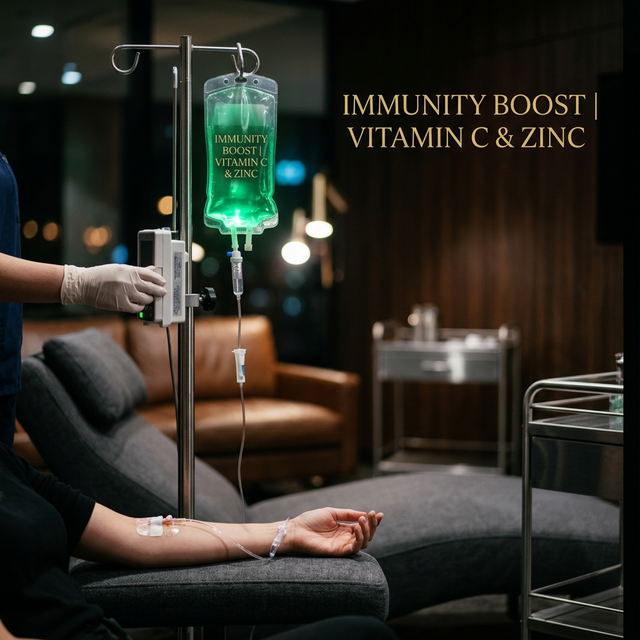
The Myers' Cocktail is to IV wellness therapy what the espresso is to coffee — the foundational formula that everything else builds from. It was the original intravenous wellness infusion, developed by a Baltimore physician decades before "IV drip bars" became a thing, and it remains one of the most commonly administered IV therapies in the world today.
This guide covers everything you need to know about the Myers' Cocktail: its history, exact ingredients, what clinical research says about its benefits, what conditions it's used for, and what you can realistically expect from it.
Disclaimer: This article is for educational purposes only. The Myers' Cocktail is not FDA-approved for any specific medical condition. Consult a licensed healthcare provider before pursuing any IV therapy.
The History of the Myers' Cocktail
The Myers' Cocktail was developed by Dr. John Myers, a Baltimore-based physician, during the 1950s through the 1970s. Dr. Myers administered intravenous infusions of vitamins and minerals to his patients for a wide range of conditions — chronic fatigue, asthma, fibromyalgia, upper respiratory infections, and more — and observed clinically meaningful improvements.
Myers continued treating patients with his formula until his death. After he died, a number of his patients sought out Dr. Alan Gaby, a nutritionally oriented physician in Baltimore, to continue receiving the treatment. Gaby treated hundreds of additional patients and in 2002 published a landmark retrospective review in Alternative Medicine Review documenting his experience with what he named the "Myers' Cocktail."
That 2002 paper — observational and not a controlled trial, but comprehensive and influential — sparked significant interest in intravenous micronutrient therapy among integrative medicine practitioners and established the Myers' Cocktail as a named, reproducible formulation. Today, tens of thousands of Myers' Cocktail infusions are administered monthly across the United States alone.
Myers' Cocktail: Exact Ingredients and Doses
The original Myers' Cocktail formulation as documented by Gaby (2002):
| Ingredient | Typical Dose | Function |
|---|---|---|
| Magnesium chloride | 200-500 mg | T-cell activation, muscle relaxation, anti-inflammatory, cofactor for 600+ enzymatic reactions |
| Calcium gluconate | 100-200 mg | Neuromuscular function, bone health |
| Vitamin B1 (Thiamine) | 50-200 mg | Cellular energy (Krebs cycle), neuroprotection |
| Vitamin B2 (Riboflavin) | 5-50 mg | Mitochondrial electron chain, antioxidant recycling |
| Vitamin B3 (Niacin/Niacinamide) | 100-500 mg | NAD+ precursor, DNA repair |
| Vitamin B5 (Pantothenic Acid) | 100-500 mg | Coenzyme A synthesis, adrenal support |
| Vitamin B6 (Pyridoxine) | 50-200 mg | Cytokine modulation, lymphocyte function |
| Vitamin B12 (Methylcobalamin) | 1,000-5,000 mcg | DNA synthesis, neurological function |
| Vitamin C (Ascorbic Acid) | 1,000-5,000 mg | Immune support, collagen synthesis, antioxidant |
| Carrier solution | 250-500 mL | Normal saline or lactated Ringer's solution |
Note: Methylcobalamin (the biologically active form of B12) is generally preferred over cyanocobalamin for IV preparations — it's bioactive without requiring conversion, and avoids the small cyanide release associated with cyanocobalamin.
Modern "Enhanced" Myers' Cocktail
Most clinics now offer variations that add to this base:
- Glutathione (600-1,200 mg) — master antioxidant, liver support
- Zinc (1-5 mg) — immune function, antiviral
- Selenium (50-200 mcg) — GPx antioxidant enzyme cofactor
- Alpha-lipoic acid (300-600 mg) — antioxidant network regeneration
- Higher-dose vitamin C (5-25g) — pharmacological immune and antioxidant effects
What Does the Myers' Cocktail Do?
The Myers' Cocktail works through multiple simultaneous mechanisms — each ingredient contributing to overlapping biological effects:
Magnesium's central role: Magnesium is involved in over 600 enzymatic reactions and is chronically deficient in large segments of Western populations. It's required for T-cell activation, ATP production (as ATP-Mg²+ complex), muscle relaxation, neurotransmitter regulation, and cardiovascular function. IV magnesium achieves plasma concentrations that oral forms (limited by GI absorption and laxative effect at higher doses) often cannot.
B vitamins as metabolic cofactors: The B vitamin complex serves as the enzymatic cofactor machinery for the Krebs cycle, electron transport chain, DNA synthesis, neurotransmitter production, and methylation reactions. Deficiencies — which are common even in people with apparently reasonable diets — impair these processes in ways that manifest as fatigue, poor cognition, mood disturbances, and immune dysfunction.
Vitamin C's dual role: At the modest doses in a standard Myers' Cocktail (1-5g), vitamin C acts primarily as an antioxidant and immune cell support molecule — it accumulates in neutrophils and lymphocytes at high concentrations, supporting their killing capacity. At higher pharmacological IV doses (25g+), additional pro-oxidant mechanisms become relevant for antiviral and anti-cancer applications.
The synergy argument: The Myers' Cocktail is designed on the premise that these nutrients work together — replenishing cofactors, antioxidants, and metabolic substrates simultaneously, enabling cellular function across multiple systems at once. This synergistic rationale is clinically intuitive even if it's difficult to study in isolation.
What the Clinical Evidence Shows
Gaby's 2002 Review (Foundational, but Limited by Design)
Dr. Gaby's retrospective review documented improvements across hundreds of patients treated with the Myers' Cocktail over 25 years of practice. Conditions that consistently responded included:
- Asthma attacks
- Migraine headaches
- Chronic fatigue and fibromyalgia
- Upper respiratory tract infections
- Acute muscle spasms
- Depression and anxiety
- Premenstrual syndrome (PMS)
- Cardiovascular disease support
This is observational data from a single practitioner — valuable as clinical documentation but not a controlled trial. Still, its breadth and consistency across 25 years of practice is meaningful.
Fibromyalgia RCT (Ali et al., 2009, Journal of Alternative and Complementary Medicine)
This is the best-controlled evidence for the Myers' Cocktail as a distinct formulation:
- Double-blind, randomized, placebo-controlled trial
- n=34 fibromyalgia patients
- Myers' Cocktail vs. placebo injections
- Result: IV Myers' Cocktail group showed significantly greater improvements in pain, depression, and fatigue scores versus placebo
- Limitation: Small sample; single study; fibromyalgia-specific
The Hangover Treatment Context (Emerging Evidence)
Myers' Cocktail-based formulas are now widely offered as hangover treatments. The rationale is sound: alcohol depletes B vitamins (particularly B1, B6), causes magnesium losses, and creates oxidative stress through acetaldehyde generation. Replenishing these nutrients IV may accelerate recovery.
A 2021 study in Nutrients found that IV vitamin and mineral infusion reduced hangover symptom severity and duration compared to placebo — small sample but peer-reviewed RCT evidence for this specific application.
Chronic Fatigue / ME/CFS
Multiple small studies and extensive observational data from integrative medicine practices document improvements in chronic fatigue with IV micronutrient therapy. No large, well-designed RCT in ME/CFS patients has been completed as of 2026. The mechanistic basis (B vitamin support for mitochondrial function, magnesium for cellular energy, vitamin C for immune modulation) is sound.
What Conditions Is the Myers' Cocktail Used For?
Based on clinical evidence and practice:
| Condition | Evidence Level |
|---|---|
| Fibromyalgia | Moderate (small RCT) |
| Chronic fatigue | Preliminary (observational) |
| Asthma (acute attack adjunct) | Observational |
| Migraine headache | Observational; some small trials |
| Upper respiratory infections | Preliminary |
| Acute muscle spasm | Observational |
| Hangover recovery | Small RCT evidence |
| General wellness/energy | Commonly reported; anecdotal |
| Depression and anxiety support | Observational |
Myers' Cocktail vs. Modern Immunity Drips: What's the Difference?
The Myers' Cocktail is the foundation. Modern immunity drips typically build on it with:
- Higher-dose vitamin C (up to 25-50g vs. 1-5g in Myers')
- Added glutathione (not in original formula)
- Added zinc and selenium
- Additional amino acids (glutamine, lysine)
- Sometimes NAD+ precursors
The Myers' Cocktail is the entry-level, foundational formulation. Enhanced immunity drips are more intensive and targeted.
Side Effects of the Myers' Cocktail
The Myers' Cocktail is generally very well-tolerated at standard doses. Common side effects:
- Flushing and warmth — typically from magnesium or niacin (B3); resolves quickly
- Metallic taste — B vitamins; harmless
- Lightheadedness — uncommon; typically in dehydrated patients
- Temporary blood pressure drop — from IV magnesium vasodilatory effect; uncommon at wellness doses
Rare: Allergic reaction to any ingredient. Anaphylaxis is uncommon but possible — qualified staff should be present.
Important note: IV vitamin C at doses above 15-25g requires pre-treatment G6PD testing, as individuals with G6PD deficiency can experience hemolysis at pharmacological ascorbate concentrations. Standard Myers' Cocktail doses (1-5g) are typically safe without G6PD testing, but higher-dose formulations require it.
How Much Does a Myers' Cocktail Cost?
In the United States:
| Type | Approximate Cost |
|---|---|
| Classic Myers' Cocktail | $100-$200 |
| Enhanced Myers' (with glutathione) | $150-$300 |
| Myers' + high-dose vitamin C (15g) | $200-$400 |
| Initial consultation (first visit) | $100-$300 |
Package pricing (4-10 sessions) typically saves 10-15%.
The Bottom Line
The Myers' Cocktail is the foundational IV wellness formula — not because it's been proven by large controlled trials, but because it has the longest clinical history, the most published observational data, a logical biochemical rationale, and an excellent safety record at standard doses.
It is most likely to be beneficial for people who are genuinely deficient in the nutrients it delivers — which, given widespread dietary gaps in magnesium, B vitamins, and vitamin C, is more common than most people realize.
For general wellness, the Myers' Cocktail is a well-tolerated, reasonably evidence-supported starting point for IV therapy. For more specific immune, anti-aging, or recovery goals, enhanced formulations — including higher-dose vitamin C or added glutathione — may offer additional benefit.
Related reading:
- Immunity IV Drip Benefits: What the Science Actually Supports
- High-Dose Vitamin C IV Therapy: Uses, Evidence, and Safety
- What to Expect From Your First Immunity Drip
- IV Therapy and Advanced Wellness Treatments: The Complete Guide
This article is for educational purposes only. The Myers' Cocktail is not FDA-approved as a treatment for any medical condition. Consult a licensed healthcare provider.