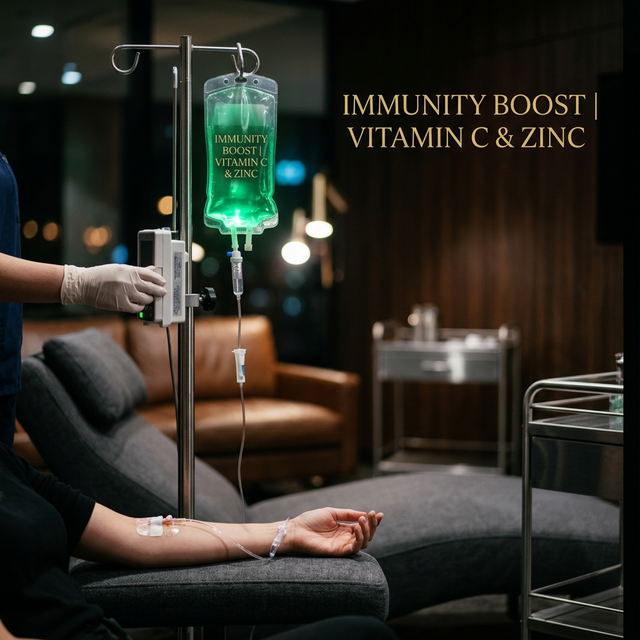
If you've never had an IV drip outside of a hospital or medical setting, the prospect of sitting in a wellness clinic with a needle in your arm might feel unfamiliar — or even intimidating. The reality is considerably more relaxed than a hospital experience, but knowing what to expect before you walk through the door makes everything easier.
This guide walks you through an immunity drip session from start to finish: how to prepare, what the intake process looks like, what happens during the infusion, what you'll feel, and what to watch for afterward. No surprises.
Before Your Session: What to Do to Prepare
Eat Something First
IV drips work better on a non-empty stomach. High-dose vitamins — particularly the B vitamins in immunity drips — can cause nausea in some people if they're fasted. Eat a light to moderate meal 1-2 hours before your session. Nothing heavy (you'll be reclining for 30-60 minutes), but enough to have food in your stomach.
Hydrate Well
Come in well-hydrated. Good hydration makes veins easier to access — a practical benefit that reduces the likelihood of difficult catheter placement. Drink 16-24 oz of water in the 1-2 hours before your appointment.
Disclose All Medications and Supplements
This is genuinely important, not a formality. Some supplements interact with IV drip ingredients:
- High-dose antioxidants (vitamin C, E) can theoretically interact with certain treatments — disclose everything
- Anticoagulants (blood thinners) can affect your risk at the IV site
- High-dose biotin (from other supplements) can interfere with certain lab tests — worth noting to any provider
Leave Heavy Exercise for Another Day
Intense exercise depletes electrolytes and creates physiological demand that may make IV side effects more pronounced. Keep the day of your IV drip light.
The Medical Intake Process
A reputable immunity drip clinic will complete a proper medical intake before your first infusion. This includes:
Health history review:
- Current medications and supplements
- Allergies (especially to any ingredients in the formulation)
- Relevant medical history (kidney disease, G6PD deficiency, pregnancy, autoimmune conditions)
- Recent illnesses or symptoms
Vital signs:
- Blood pressure check (standard before any IV)
- Some clinics also check pulse oxygen saturation
Lab requirements: For standard wellness immunity drips, extensive lab work is not always required before a first session. However, reputable clinics will flag contraindications through the intake history. For higher-dose or specialized protocols, baseline labs (CBC, metabolic panel) may be required.
Formulation discussion: Your provider should discuss what's in your specific drip — the doses of each ingredient — and answer questions. If a provider can't tell you what's in your IV bag, that's a concern.
Informed consent: You should sign an informed consent document acknowledging the nature of IV therapy, potential side effects, and the fact that it is not FDA-approved for immune enhancement.
The IV Placement
This is often the step that causes the most anxiety in first-timers. In practice, IV placement at a professional wellness clinic is typically smoother than hospital emergency settings:
Where: Most commonly the antecubital vein (inside of the elbow) or a forearm vein. The nurse will examine both arms and choose the best access point.
What it feels like: A brief, sharp pinch during needle insertion. Once the cannula (a small, flexible plastic catheter) is in place, the needle is removed and only the soft plastic catheter remains in the vein. You'll feel the cannula secured with medical tape, and then nothing during the infusion itself.
If it's difficult: Some people have veins that are harder to access — dehydration makes this worse (another reason to hydrate beforehand). If placement is difficult, a skilled nurse will try a slightly different location. This is normal and nothing to be concerned about.
Fear of needles: If you have significant needle anxiety, let the clinic know in advance. Most trained nurses are skilled at managing this. Brief application of a topical numbing cream (EMLA) can reduce the sensation if arranged in advance.
During the Infusion: What You'll Experience
Position and Environment
You'll be seated in a reclining chair — similar to a dental chair or spa chair — for the duration of the infusion. Most IV wellness lounges are designed to feel comfortable: good lighting, often soft music, blankets available. It's genuinely closer to a spa experience than a clinical one.
The Drip Rate
The IV line connects to a bag of your formulated infusion. The flow rate is controlled — either by a manual flow clamp or an electronic infusion pump. Standard immunity drip infusions run for 30-60 minutes. Some high-dose vitamin C protocols (25g+) take longer — up to 90 minutes.
What You'll Feel During Infusion
Most people notice:
- The subtle coolness of the IV fluid entering the vein (especially at the start)
- Gradual relaxation — the act of resting for 30-60 minutes with nothing to do is in itself a positive experience for most people
- Possible mild warmth spreading from the arm as infusion progresses
Some people notice (common but not universal):
- A metallic taste — particularly associated with B vitamins and magnesium. This is harmless and temporary.
- Mild flushing or warmth in the face or chest — common with B3 (niacin) if included; also temporary.
- Mild lightheadedness — especially in people who are slightly dehydrated or anxious. Drinking water and lying back more fully usually resolves this quickly.
What to alert staff about immediately:
- Chest tightness or pain (rare at standard wellness doses; more common at high NAD+ doses)
- Difficulty breathing
- Rash, hives, or significant flushing (possible allergic reaction)
- Pain or swelling at the IV site (may indicate the cannula has moved)
- Palpitations or racing heart
A nurse should check on you periodically during the infusion. Reputable clinics have a clinical staff member present throughout — not just at setup and completion.
What to Do During the Session
Bring a book, podcast, or just plan to decompress. You can use your phone with one hand (the other arm has the IV). Many clinics offer Wi-Fi. Some people nap. The 30-60 minutes passes quickly.
After the Infusion: What Happens Next
Immediately After
Once the infusion is complete:
- The cannula is removed and a small bandage applied to the site
- You'll be asked to sit up slowly and stay seated for a few minutes before standing, to avoid lightheadedness
- You can eat, drink, and resume normal activities within minutes of leaving
That Day
What many people report:
- A noticeable uplift in energy within 1-4 hours after a session — particularly pronounced after first sessions in people who were deficient
- Some people feel "buzzed" or alert; others feel relaxed and calm
- Occasional mild fatigue in the evening after a first session (the body processing the influx of nutrients)
The warm glow effect: Many first-time IV drip recipients describe a pleasant sense of well-being in the hours following treatment. This is real, though it's worth acknowledging it reflects a combination of genuine nutritional delivery, placebo response, and the simple effect of an hour of rest.
The Next Few Days
- Energy levels may feel better than baseline for 24-72 hours after a session
- Urine may be more intensely yellow (from B vitamins being excreted) — this is normal and harmless
- Sleep quality improvements are commonly reported, particularly if magnesium deficiency was corrected
When to Contact the Clinic
Contact your provider if you experience after your session:
- Significant swelling, warmth, or redness along the vein used (could indicate phlebitis)
- Fever or chills
- Chest pain or shortness of breath (seek emergency care immediately)
- Significant allergic reactions
These are uncommon at properly administered wellness doses, but worth knowing about.
How Often Should You Get Immunity Drips?
For acute illness support: 1-2 sessions during and immediately after an illness. Some practitioners recommend 3 sessions over 5-7 days for significant viral illness.
For ongoing wellness maintenance: Monthly is common for wellness-oriented individuals. Some people do every 6-8 weeks.
For regular immune support (high-stress seasons, travel): 1 session every 4-6 weeks.
For deficiency correction: More intensive protocols (weekly for 4-8 sessions) may be recommended if documented deficiencies are significant.
How Much Does an Immunity Drip Cost?
Standard immunity drip pricing in the United States:
| Formulation | Approximate Cost |
|---|---|
| Basic Myers' Cocktail | $100-$200 |
| Enhanced Immunity Drip (with glutathione) | $150-$300 |
| High-dose Vitamin C (15-25g) | $200-$400 |
| Premium Immunity (full panel) | $250-$400 |
| Initial consultation (first visit) | $100-$300 additional |
Package pricing (4-10 sessions) typically saves 10-15%.
For a full cost breakdown: How Much Does IV Therapy Cost? A Complete Price Guide
What Makes a Good Immunity Drip Clinic?
Look for:
- Licensed medical director (MD, DO, NMD)
- RN or licensed practitioner administering the IV
- Medical intake and health history review before treatment
- Clinician present throughout the session (not just at setup)
- Formulations from a licensed, accredited compounding pharmacy
- Transparent communication about ingredients and doses
- Informed consent documentation
Red flags:
- No medical intake or health history form
- Staff cannot explain what's in your IV
- No clinician present during infusion
- Unlicensed or home-based practitioners
- Claims that the drip will "cure" specific diseases
The Bottom Line
A first immunity drip session is generally a comfortable, low-drama experience when performed by qualified practitioners. The 30-60 minutes of sitting still in a reclining chair while your body receives a concentrated nutrient delivery tends to feel good — and many patients notice meaningful energy and well-being improvements in the hours and days that follow.
Prepare well (eat beforehand, hydrate, disclose your medications), choose a reputable provider, and go in with realistic expectations. Immunity drips can be a genuinely useful wellness tool — particularly during illness or for people with documented nutrient deficiencies.
Related reading:
- Immunity IV Drip Benefits: What the Science Actually Supports
- The Myers' Cocktail: Everything You Need to Know
- IV Therapy Safety: Risks, Contraindications, and What to Ask
- IV Therapy and Advanced Wellness Treatments: The Complete Guide
This article is for educational purposes only. IV therapy is not FDA-approved for immune enhancement. Always consult a licensed healthcare provider.