Wellness IV therapy has an excellent overall safety record when performed by trained practitioners in proper clinical settings. But "generally safe" and "risk-free" are not the same thing. Every time a needle enters a vein, there is a procedure being performed — and procedures carry risks.
This guide gives you the complete, transparent safety picture for IV wellness therapy: universal risks that apply to any IV treatment, therapy-specific risks for EBOO, ozone, NAD+, and immunity/beauty drips, absolute contraindications you must know before booking, critical drug interactions, and the right questions to ask any provider.
Being an informed patient is your best protection.
Important: If you experience chest pain, difficulty breathing, severe allergic reaction, or loss of consciousness during or after any IV therapy, call emergency services immediately.
Part 1: Universal Risks Applicable to All IV Therapy
These risks apply regardless of which specific treatment you're receiving. They are inherent to the IV access procedure itself.
Phlebitis (Vein Inflammation)
What it is: Inflammation of the vein wall at or near the IV site. Ranges from mild tenderness and redness along the vein to significant pain, warmth, and swelling.
Causes: Mechanical irritation from the catheter, chemical irritation from the infusion (high osmolarity or pH extremes), and bacterial contamination.
Prevention: Proper catheter size selection, adequate dilution of concentrated nutrients, slow infusion rates, use of buffered/pH-adjusted formulations, sterile technique.
Recognition: Redness, warmth, or a cord-like feeling along the vein after treatment. Contact your clinic — mild phlebitis is managed with warm compresses; severe or spreading phlebitis warrants medical evaluation.
Infiltration and Extravasation
What it is: Infiltration occurs when the IV catheter dislodges from the vein and fluid enters the surrounding tissue. Extravasation refers to the same event with vesicant (tissue-damaging) fluids.
Causes: Catheter movement, fragile veins, patient movement during infusion, improper securing.
Recognition: Swelling, coolness, or tightness at the IV site. A competent nurse will catch this quickly; alert staff immediately if you notice it.
Risk: Most wellness IV fluids are non-vesicant — extravasation causes discomfort and local swelling but not permanent damage. High-concentration formulations (e.g., hypertonic solutions) can cause more significant tissue injury.
Infection (Local and Systemic)
What it is: Bacteria can be introduced at the IV site, causing local skin infection (cellulitis) or, rarely, entry into the bloodstream (bacteremia/septicemia).
Causes: Inadequate skin disinfection before cannulation, non-sterile equipment, contaminated compounded preparations, poor hand hygiene.
Prevention: Strict aseptic technique, single-use sterile equipment, accredited compounding pharmacy preparations, proper skin preparation (chlorhexidine or isopropyl alcohol).
Recognition: Increasing redness, warmth, swelling at the IV site hours to days after treatment; fever; feeling systemically unwell. Seek medical care promptly if these develop.
Air Embolism
What it is: Introduction of air into the bloodstream via the IV line. Large air bubbles can obstruct blood flow and, in severe cases, cause cardiovascular or neurological events.
Causes: Improperly primed IV lines (air left in the tubing), loose connections, empty IV bags allowed to run dry without monitoring.
Prevention: Rigorous line priming before connection, careful monitoring during infusion, use of air-eliminating filters, no hanging empty bags unattended.
Risk level in wellness settings: Low when proper technique is used. Not zero — requires attention to technique.
Allergic and Anaphylactic Reactions
What it is: Immune response to any ingredient in the infusion. Ranges from mild (itching, hives) to severe (anaphylaxis — throat swelling, blood pressure drop, respiratory distress).
Causes: Any ingredient can be an allergen. B vitamins (particularly thiamine) and preservatives in compounded preparations are most commonly implicated in allergic IV reactions.
Prevention: Thorough allergy history before treatment; slow initial infusion rate; having epinephrine and emergency equipment on-site.
Recognition: Sudden itching, hives, facial swelling, throat tightness, difficulty breathing, drop in blood pressure during infusion. Alert staff immediately — this is a medical emergency.
This is why a licensed clinician must be present throughout your infusion — not just at setup.
Electrolyte Imbalances
What it is: Rapid IV delivery of electrolyte-containing fluids can shift plasma electrolyte concentrations, particularly in patients with pre-existing imbalances or impaired kidney function.
Calcium: IV calcium at high doses can cause cardiac arrhythmia. Standard Myers' Cocktail doses are safe in screened patients.
Magnesium: High-dose IV magnesium can cause hypotension, flushing, bradycardia, and at supratherapeutic levels, respiratory depression. Relevant primarily in high-dose clinical settings, not standard wellness doses.
Prevention: Blood pressure monitoring, awareness of cardiac history, appropriate dose limits, slow infusion rates.
Part 2: Therapy-Specific Safety Considerations
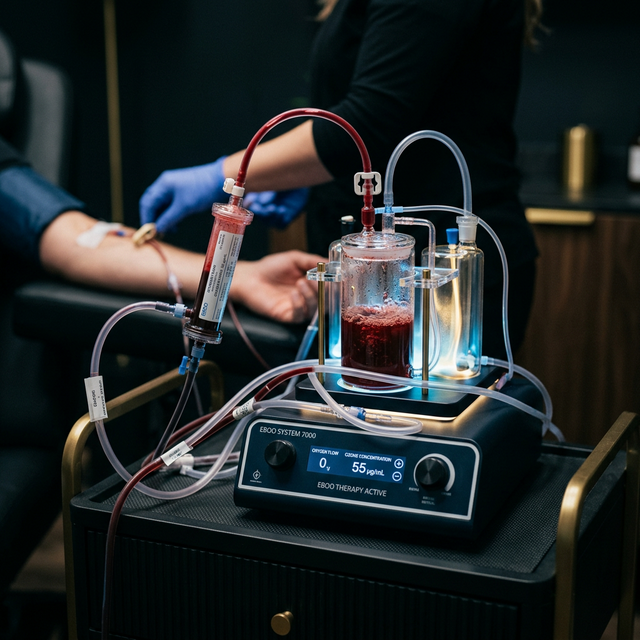
EBOO and Ozone Therapy Safety
Absolute contraindications:
- G6PD (glucose-6-phosphate dehydrogenase) deficiency — mandatory pre-screening before any ozone therapy. G6PD deficiency impairs the cell's ability to manage oxidative stress; ozone therapy can trigger acute hemolytic anemia.
- Active hemorrhage or severe bleeding disorders
- Severe thrombocytopenia (platelet count < 50,000/mcL)
- Pregnancy (insufficient safety data; theoretical fetal risk)
- Uncontrolled hyperthyroidism
- Acute myocardial infarction within 3-6 months
- Severe anemia (hemoglobin < 7 g/dL)
- Alcohol intoxication
Relative contraindications (require specialist evaluation):
- Hemophilia and coagulopathies
- Anticoagulant therapy (warfarin, NOACs, aspirin, clopidogrel)
- Active autoimmune flare
- Uncontrolled hypertension
- Recent stroke (within 3 months)
- Severe heart failure (NYHA III-IV)
- Patients on chemotherapy
Critical ozone safety rule: Ozone must never be inhaled. Medical ozone equipment must include ozone destruction units. Avoid any clinic that cannot account for safe ozone disposal.
The obsolete danger: Direct IV injection of ozone gas (without pre-mixing with blood) carries an extreme risk of fatal gas embolism. This method is completely obsolete and never practiced by legitimate ozone therapy practitioners. If anyone suggests this, leave immediately.
Ozone therapy side effects:
- Jarisch-Herxheimer-like reaction (flu-like symptoms 24-48 hours after initial sessions)
- Local soreness at IV site
- Mild fatigue
- Temporary worsening of symptoms in first few sessions (reported "healing reaction")
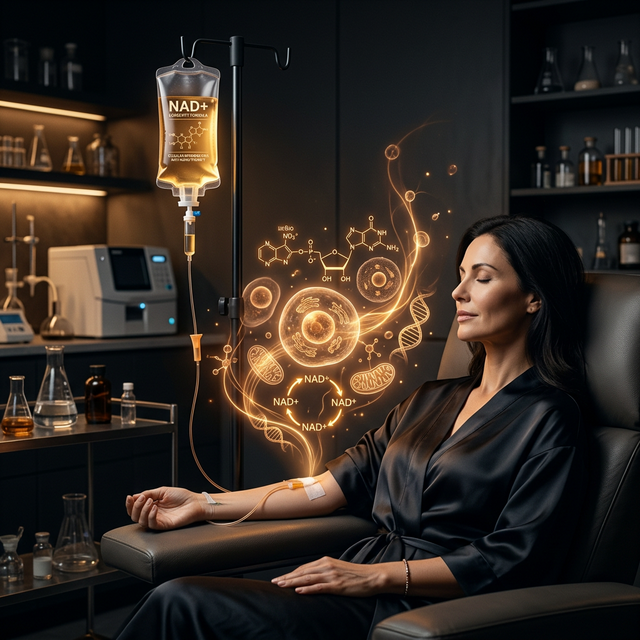
NAD+ IV Therapy Safety
Absolute contraindications:
- Active malignancy (oncology clearance mandatory — theoretical concern about supporting cancer cell energy; absolute conflict with PARP inhibitor chemotherapy)
- Known hypersensitivity to NAD+ or niacin derivatives
- Active unstable cardiac arrhythmia
- Acute hemodynamic instability
Relative contraindications:
- History of cardiac arrhythmias (SVT, AFib) — pre-treatment ECG recommended
- Uncontrolled hypertension
- Severe renal or hepatic impairment
- Pregnancy and breastfeeding
- Patients on anticoagulants
Critical drug interaction: PARP inhibitors (olaparib, niraparib, rucaparib) — used in cancer treatment — are directly antagonized by IV NAD+. This is an absolute clinical contraindication.
Common NAD+ side effects (rate-dependent — resolve with slower infusion):
| Side Effect | Estimated Frequency |
|---|---|
| Chest tightness/pressure | 30-50% |
| Nausea | 30-50% |
| Flushing/warmth | 20-40% |
| Headache | 20-35% |
| Abdominal cramping | 15-25% |
| Muscle cramping | 10-20% |
| Anxiety/restlessness | 10-20% |
| Palpitations | 5-15% |
Management: Slow the infusion rate. These effects typically resolve quickly. Experienced clinics rarely need to stop an infusion entirely.
Long-term NAD+ safety concern: At very high chronic doses, nicotinamide byproducts consume methyl groups (methylation burden). Co-supplementation with methylation support (methylated B12, methylfolate, betaine) is sometimes recommended in long-term protocols.
High-Dose IV Vitamin C Safety
Absolute contraindication: G6PD deficiency — pharmacological vitamin C generates extracellular H2O2; G6PD-deficient red blood cells cannot neutralize it, risking hemolytic anemia.
G6PD testing is mandatory before vitamin C doses above 10-15g.
Relative contraindications:
- History of calcium oxalate kidney stones (high-dose vitamin C increases urinary oxalate)
- Chronic kidney disease (reduced renal clearance of ascorbate metabolites)
- Iron overload conditions (hemochromatosis) — vitamin C enhances iron absorption
Common side effects:
- Vein irritation (sodium ascorbate/buffered pH preparations reduce this)
- Temporary osmotic discomfort at very high doses
- Mild nausea at doses above 25g
Vitamin C and chemotherapy:
- Does NOT interfere with most conventional chemotherapy
- Pause vitamin C around some platinum-based agents — oncologist consultation essential
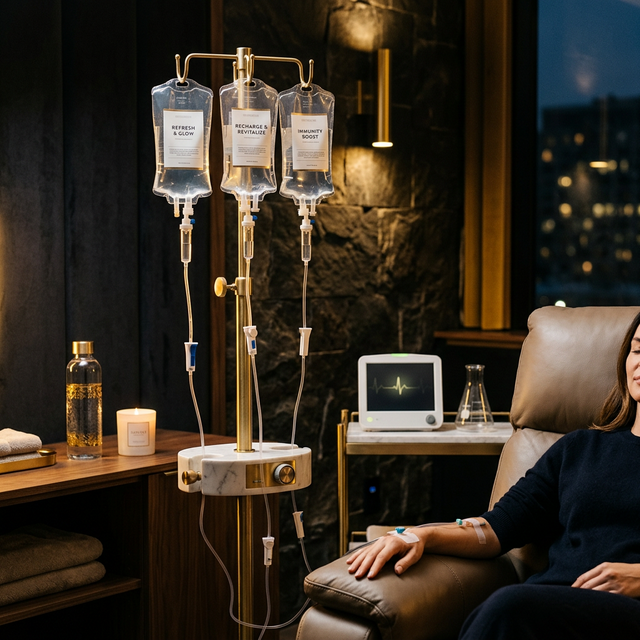
Immunity and Beauty Drip Safety
Most common concerns:
- Allergic reaction to any ingredient (B vitamins, preservatives) — thorough allergy history essential
- Biotin interference with lab tests: High-dose biotin (often in beauty drips) causes false results in cardiac troponin immunoassays. Disclose biotin use to any emergency provider if you develop chest pain. The FDA issued a safety communication about this in 2017.
- Glutathione at very high doses in G6PD-deficient individuals: relative caution warranted
Contraindications for IV beauty drips:
- Known allergy to any formulation ingredient
- G6PD deficiency (for high-dose protocols combining glutathione + pharmacological vitamin C)
- Pregnancy (insufficient safety data for most IV formulations)
- Active renal or hepatic disease
Part 3: Critical Drug Interactions for All IV Therapies
| Drug/Supplement | Interaction | Clinical Management |
|---|---|---|
| High-dose vitamin C (oral) before ozone therapy | Blunts therapeutic oxidative signal | Avoid 4-6 hrs before and 2 hrs after ozone |
| Warfarin / NOACs (anticoagulants) | Ozone: additive bleeding risk; IV vitamin C: variable | Monitor INR; dose adjustment may be needed |
| PARP inhibitors (olaparib, niraparib, rucaparib) | NAD+ directly antagonizes cancer drug mechanism | Absolute contraindication — oncology clearance required |
| Immunosuppressants (tacrolimus, cyclosporine) | Ozone's immune stimulation may counter these | Specialist consultation; transplant patients need rheumatology/transplant team input |
| Chemotherapy (platinum-based: cisplatin) | Theoretical interaction with high-dose IV vitamin C | Pause vitamin C around cisplatin sessions — oncologist to advise timing |
| Antihypertensives | IV magnesium + antihypertensives: additive BP lowering | Blood pressure monitoring; dose awareness |
| Insulin / diabetes medications | IV glucose-containing carriers affect blood sugar | Use saline (not dextrose) carriers in diabetic patients; blood sugar monitoring |
| Digoxin | IV calcium (in Myers' Cocktail) may potentiate digoxin toxicity | Avoid IV calcium in patients on digoxin |
Part 4: The Pre-Treatment Safety Checklist
Before any IV therapy session, a responsible clinic should complete the following:
For all IV therapies:
- Complete medical history and medication review
- Allergy documentation
- Blood pressure measurement
- Informed consent signed and explained
For ozone and EBOO specifically:
- G6PD enzyme assay (result on file)
- CBC with platelet count
- Comprehensive metabolic panel
- Coagulation profile (PT/INR, aPTT)
- Thyroid function tests
For NAD+ IV therapy:
- Comprehensive metabolic panel
- CBC
- Oncology clearance if any cancer history
- ECG for patients over 50 or any cardiac history
For high-dose IV vitamin C (> 15g):
- G6PD assay
- Renal function (creatinine, eGFR)
- Kidney stone history documented
If a clinic is unwilling or "doesn't need" to complete appropriate pre-treatment evaluation, this is a significant red flag.
Part 5: Red Flags — Providers and Practices to Avoid
Walk away from any IV therapy provider who:
- Does not require any medical history or health questionnaire before treatment
- Cannot tell you the ingredients and doses in your IV formulation
- Does not have a licensed clinician present during your infusion
- Offers ozone therapy without requiring G6PD testing
- Performs or offers direct IV injection of ozone gas
- Claims their IV drip will "cure" cancer, autoimmune diseases, or specific medical conditions
- Operates without connection to a licensed, accredited compounding pharmacy
- Allows unlicensed staff to place IV catheters or manage infusions
- Offers "concierge" or home-visit IV services without adequate emergency protocols
Part 6: Compounding Pharmacy Safety
The quality of your IV drip depends enormously on the compounding pharmacy that prepared it. Unlike FDA-approved pharmaceuticals, compounded IV preparations are not individually tested by the FDA before release.
What to look for:
- 503A-accredited pharmacy: Individual patient prescriptions; highest quality control
- 503B outsourcing facility: Larger-scale compounding; subject to FDA facility inspections; slightly less individualized
- Sterility testing: Ask if the pharmacy performs sterility testing on batches
- Certificate of Analysis (CoA): Verification that each component meets purity standards
The 2012 New England Compounding Center tragedy (fungal meningitis outbreak from contaminated steroid injections; 64 deaths) illustrates the real stakes of compounding pharmacy quality. Choose providers who use established, accredited compounding sources.
The Bottom Line
IV wellness therapy has an excellent safety record when delivered by qualified practitioners following established protocols. The complications that make headlines are overwhelmingly attributable to untrained providers, inadequate screening, improper technique, or poor-quality compounded preparations — not to the therapies themselves when properly administered.
Your safety is primarily in your own hands through:
- Choosing licensed, qualified providers with appropriate medical oversight
- Completing required pre-treatment screening
- Disclosing all medications, supplements, and health conditions honestly
- Being present and attentive during your infusion — alert staff to any unusual symptoms promptly
- Following up with your primary care physician about any IV therapy you pursue
Related reading:
- Who Should Get IV Therapy? A Guide for Ideal Candidates
- What to Expect From Your First Immunity Drip
- EBOO Therapy Benefits: What the Research Actually Shows
- NAD+ IV Therapy: The Complete Beginner's Guide
- IV Therapy and Advanced Wellness Treatments: The Complete Guide
This article is for educational purposes only. If you experience a medical emergency during or after IV therapy, call emergency services immediately. Always consult a licensed healthcare provider before starting any IV treatment.