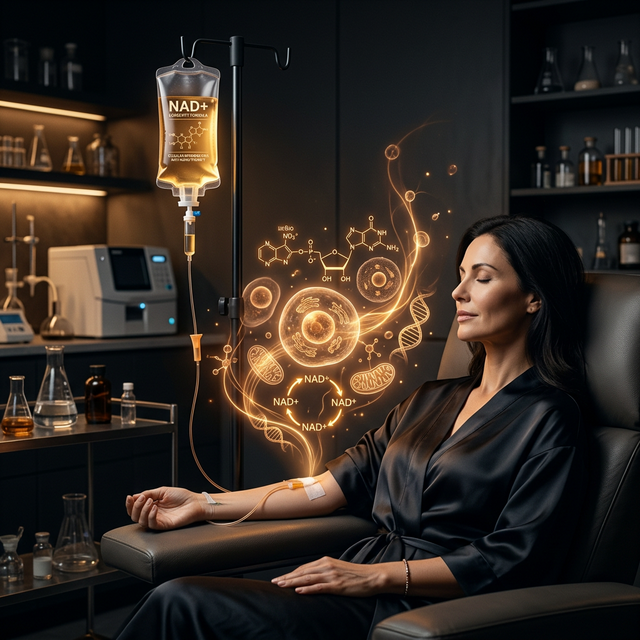
Addiction recovery is one of the most difficult challenges in medicine. Standard approaches — medically assisted detox, behavioral therapy, medication-assisted treatment — work for many people, but relapse rates remain high and the withdrawal experience can be severe enough to deter people from attempting recovery at all.
NAD+ IV therapy has emerged as an adjunctive approach in addiction medicine, with proponents claiming it reduces withdrawal severity, accelerates detox, and helps restore the brain chemistry disrupted by substance use. The clinical application predates the current biohacking and longevity interest in NAD+ — and has the most developed body of observational evidence of any NAD+ IV application.
This guide explains the science behind why NAD+ matters in addiction, what the clinical evidence shows, what a treatment protocol looks like, and who this approach is — and isn't — appropriate for.
Disclaimer: This article is for educational purposes only. NAD+ IV therapy is not FDA-approved for addiction treatment. It should only be pursued as an adjunct to comprehensive, evidence-based addiction care under medical supervision.
Why Addiction Depletes NAD+
Chronic substance use — across alcohol, opioids, stimulants, and benzodiazepines — depletes neuronal NAD+ through multiple converging mechanisms:
Direct NAD+ consumption:
- Alcohol metabolism generates excess NADH (the reduced form), shifting the cellular NAD+/NADH ratio toward depletion and impairing the NAD+-dependent processes that maintain neuronal function
- Methamphetamine and other stimulants increase oxidative stress, activating PARP1 to repair the resulting DNA damage — at the cost of massive NAD+ consumption
- Opioids impair mitochondrial function and disrupt NAD+-dependent energy production in neurons
Downstream consequences of NAD+ depletion in addiction:
- Impaired dopaminergic signaling and neurotransmitter synthesis (dopamine synthesis requires NAD+-dependent enzymes)
- Reduced mitochondrial energy production in the prefrontal cortex and limbic system — regions governing impulse control, reward processing, and craving
- Impaired DNA repair in neurons, compounding substance-induced neurotoxicity
- Increased neuroinflammation (SIRT1 suppression removes the brake on NF-kB inflammatory signaling)
The result is a neurochemical landscape that drives craving, impairs executive function, and makes early recovery profoundly difficult. Restoring NAD+ levels is theorized to address these biological substrates directly — not just managing symptoms but supporting genuine neurochemical repair.
The Tryptophan-NAD+ Connection
There is an important metabolic connection between NAD+ and addiction that goes beyond simple NAD+ depletion:
Tryptophan — an essential amino acid — is the precursor to both serotonin (via the serotonin pathway) and NAD+ (via the kynurenine pathway). Chronic stress, inflammation, and substance use shift tryptophan metabolism preferentially toward the kynurenine/NAD+ production pathway rather than serotonin synthesis.
This "serotonin steal" effect means that in substance-dependent individuals, tryptophan is being preferentially diverted to NAD+ production attempts (without adequate dietary precursors to sustain it), simultaneously reducing serotonin availability and depleting NAD+ — a dual neurochemical crisis that contributes to the anxiety, depression, insomnia, and craving characteristic of early recovery.
IV NAD+ administration provides the depleted coenzyme directly, potentially relieving the metabolic demand driving this serotonin-NAD+ competition.
The Clinical Evidence: What Studies Show
The honest picture: NAD+ IV therapy for addiction recovery has the most developed observational evidence of any IV NAD+ application, but still lacks placebo-controlled RCTs. Here's what exists:
BrainNAD Foundation / Mestayer Clinic Data (Grade D — Observational)
Dr. Richard Mestayer and the BrainNAD Foundation have reported outcomes from hundreds of patients treated with intensive IV NAD+ protocols (750-1,500 mg/day for 10 consecutive days) across multiple substance dependencies:
- Patients treated for alcohol dependence: reported significantly reduced craving scores and withdrawal severity versus historical expectation
- Opioid-dependent patients: reported shorter, less severe withdrawal experiences
- Methamphetamine, benzodiazepine, nicotine: positive outcomes reported across substances
Limitations: No control group, no blinding, practitioner-reported outcomes, selection bias (motivated patients seeking expensive private treatment), no peer-reviewed publication of full datasets.
Trescot et al. (2020, Journal of Alternative and Complementary Medicine) — Grade C
This pilot study evaluated IV NAD+ in opioid withdrawal:
- Patients received IV NAD+ during active opioid withdrawal
- Primary outcome: opioid withdrawal symptom scale scores
- Result: Statistically significant reduction in withdrawal symptom scores compared to pre-treatment baseline
- Limitation: No placebo arm, small sample, no long-term follow-up
This is the best-controlled published clinical study specifically examining IV NAD+ in addiction as of early 2026 — and it lacks a placebo control.
Dose-Escalation Safety Studies
Multiple dose-escalation tolerability studies have confirmed that IV NAD+ at doses up to 1,000 mg is safe, with predictable side effects that are rate-dependent and manageable. These studies establish safety parameters rather than clinical efficacy.
Ongoing Clinical Trials (as of 2026)
Registered trials are evaluating IV NAD+ for:
- Major depression (including treatment-resistant)
- Opioid use disorder (with controlled design)
- Alcohol use disorder
Results expected 2025-2027. These trials will provide the first controlled evidence.
How NAD+ IV Therapy for Addiction Works in Practice
The Addiction Recovery Protocol
Intensive detox phase:
- 750-1,500 mg IV NAD+ per day
- 10 consecutive days
- Sessions run 8-14 hours per day (due to required slow infusion rate)
- Often combined with IV vitamin C, B-complex, amino acids, and magnesium
Maintenance phase:
- Weekly to monthly infusions (500-750 mg) for 3-6 months post-detox
- Oral NMN or NR daily between infusions
- Integrated into comprehensive addiction treatment (counseling, support groups, MAT where appropriate)
What Patients Typically Report
Across observational data from addiction clinics, common patient-reported experiences include:
- Reduced withdrawal severity: Particularly notable for opioid withdrawal (cramping, anxiety, insomnia, cravings) and alcohol withdrawal (tremors, sweating, agitation)
- Faster craving reduction: Some patients report craving intensity declining significantly within 3-5 days of intensive treatment
- Improved mood and cognitive clarity: Reduced "anhedonia" (inability to feel pleasure) — the neurochemical flat state of early recovery
- Improved sleep quality: A frequently reported and particularly valued benefit, given how severely insomnia complicates early recovery
- Reduced acute anxiety
These reports are consistent across multiple clinics and patient populations — but again, without controls, they cannot be definitively attributed to NAD+ specifically versus the overall intensive clinical care environment, placebo effects, and the natural progression of detox.
What Substances Has It Been Used For?
NAD+ IV therapy for addiction has been studied or reported for:
| Substance | Reported Benefit | Evidence Quality |
|---|---|---|
| Alcohol | Reduced withdrawal severity, less tremor and agitation | Observational (Grade D-C) |
| Opioids | Reduced cramping, anxiety, insomnia during withdrawal | Pilot trial + observational |
| Methamphetamine | Reduced cravings, improved mood stability | Observational only |
| Benzodiazepines | Supported tapering process | Observational only |
| Nicotine | Reduced craving intensity | Anecdotal |
Important Limitations and Cautions
NAD+ Is Not a Standalone Addiction Treatment
This cannot be overemphasized: IV NAD+ should be adjunctive to evidence-based addiction care, not a replacement for it.
The addiction field has robust evidence for:
- Medication-assisted treatment (MAT): buprenorphine, naltrexone, methadone for opioid use disorder; naltrexone for alcohol use disorder
- Behavioral therapies: cognitive-behavioral therapy, motivational enhancement, 12-step facilitation
- Medical monitoring during withdrawal (detox)
NAD+ IV therapy should be layered onto this foundation, not substituted for it. Any clinic offering NAD+ as a complete addiction cure without comprehensive behavioral support should be viewed skeptically.
The Placebo Problem
The open-label nature of all current addiction studies makes placebo effects impossible to rule out. Early recovery patients in a clinical setting receiving intensive daily attention, IV fluids, vitamins, and professional support — regardless of the specific active agent — may experience symptomatic improvement from those contextual factors alone.
Relapse Prevention: Mixed Evidence
While NAD+ may ease the acute withdrawal phase, there is no controlled evidence demonstrating that IV NAD+ therapy reduces long-term relapse rates beyond what standard care provides. Craving severity may temporarily decrease, but the psychosocial drivers of addiction require behavioral intervention that NAD+ does not address.
Is NAD+ IV Addiction Treatment Right for You?
Most likely to benefit:
- Individuals in early recovery from alcohol, opioids, or stimulants, who want an adjunctive biological support alongside conventional treatment
- Those who have experienced severe withdrawal in previous recovery attempts
- Patients with additional neurological concerns (TBI history, Long COVID, cognitive decline) where NAD+'s neuroprotective mechanisms may provide additional benefit
- Individuals who have tried conventional approaches and relapsed, and are seeking an integrative recovery approach
Not appropriate for:
- Active malignancy (without oncology clearance)
- Cardiac arrhythmia history (without pre-treatment ECG and cardiologist review)
- Patients on PARP inhibitor chemotherapy (absolute contraindication)
- Anyone expecting NAD+ therapy alone to produce lasting sobriety without comprehensive behavioral treatment
Cost of NAD+ Addiction Recovery Protocol
The intensive 10-day protocol is among the most expensive IV therapy offerings:
| Component | Cost Range |
|---|---|
| Initial consultation + labs | $300-$600 |
| 10-day intensive protocol (750-1,500 mg/day) | $3,000-$10,000 |
| Monthly maintenance sessions (3-6 months) | $300-$600/session |
| Oral NMN/NR maintenance | $50-$200/month |
The 10-day intensive course at premium addiction-focused clinics can reach $10,000-$15,000 total when including accommodation, program fees, and supplementary services. This price point is prohibitive for most people and represents a significant access equity issue in addiction medicine.
For full cost context: How Much Does IV Therapy Cost?
The Bottom Line
NAD+ IV therapy for addiction recovery stands on a scientifically credible mechanistic foundation — chronic substance use genuinely depletes neuronal NAD+, and restoring it addresses real biological deficits. The observational clinical data is consistently promising. The evidence quality, however, remains at the pilot-study level, and adequately powered, placebo-controlled RCTs are still pending.
The most accurate framing: NAD+ IV therapy is a promising, biologically rational adjunctive treatment for addiction recovery — not a proven cure, but a well-reasoned complement to evidence-based care for individuals seeking every available biological support tool.
If you or someone you love is considering this approach, ensure it is pursued within a comprehensive addiction treatment program, with full medical supervision, and realistic expectations about what the science currently supports.
Related reading:
- What Is NAD+ IV Therapy? The Complete Beginner's Guide
- NAD+ IV Therapy for Anti-Aging: What the Research Shows
- NAD+ IV vs. NMN and NR: Which Should You Choose?
- IV Therapy and Advanced Wellness Treatments: The Complete Guide
This article is for educational purposes only. NAD+ IV therapy is not FDA-approved for addiction treatment. Always consult licensed healthcare providers for addiction medicine guidance. If you or someone you know is in crisis, contact the SAMHSA National Helpline: 1-800-662-4357.