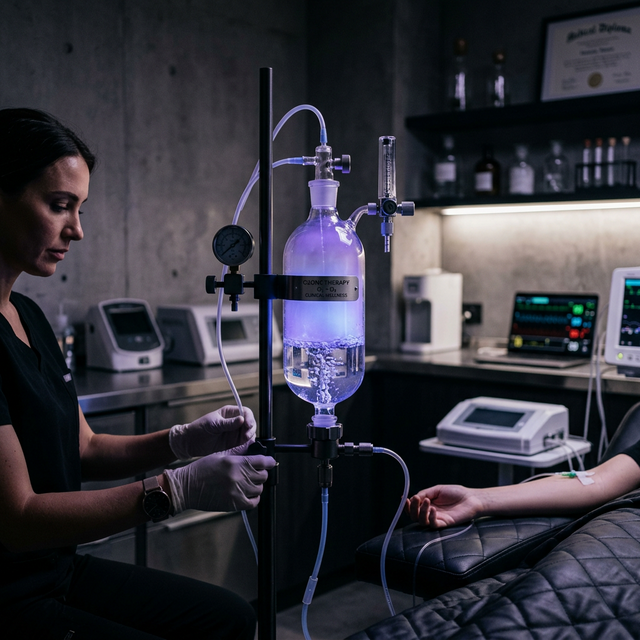
When most people hear "ozone," they think of the atmospheric layer that protects Earth from ultraviolet radiation — or possibly the smell after a summer thunderstorm. Medical ozone therapy is something quite different: the controlled, therapeutic application of a precisely calibrated ozone-oxygen mixture to stimulate the body's natural healing and antioxidant systems.
It's been practiced in Germany since the 1950s, is officially recognized by health authorities in multiple countries, and has a substantial body of peer-reviewed clinical research behind it — particularly in orthopedics, wound care, and dentistry.
This guide explains what medical ozone actually is, how it works at the cellular level, the different methods used to administer it, and what the evidence says about when it's most appropriate.
Disclaimer: This article is educational and does not constitute medical advice. Ozone therapy is not FDA-approved in the United States. Always consult a licensed healthcare provider.
What Is Medical Ozone?
Ozone (O3) is a triatomic form of oxygen — three oxygen atoms bonded together instead of the two (O2) in regular atmospheric oxygen. This extra oxygen atom makes ozone highly reactive: it readily donates its third oxygen atom to other molecules, which is the source of both its industrial disinfection applications and its medical therapeutic effects.
Medical ozone is never administered in pure form. It is always delivered as a mixture of ozone and medical-grade oxygen (O2), with ozone comprising a precisely controlled 1-5% of the mixture. The concentration of ozone is measured in micrograms per milliliter (mcg/mL), with therapeutic ranges typically between 10-80 mcg/mL depending on the application.
What makes medical ozone different from air pollution ozone?
- Air pollution ozone is generated from nitrogen oxides and volatile organic compounds at uncontrolled concentrations
- Medical ozone is produced from pharmaceutical-grade pure oxygen using certified medical ozone generators, at precisely calibrated concentrations
- The therapeutic window for medical ozone is specific — too little is ineffective, too much is harmful. This is why certified equipment and trained practitioners are essential.
A Brief History of Medical Ozone Therapy
Ozone therapy has a longer history than most people realize:
- 1840: Christian Friedrich Schönbein identifies and names ozone
- World War I (1914-1918): German physicians use ozone to treat infected wounds and gangrene — the first documented medical applications
- 1950s-1970s: Dr. Joachim Hänsler develops the first reliable medical ozone generator; the German Medical Society for Ozone Therapy is founded in 1972
- 1980s: Expanded use across Europe; investigation of ozone for HIV/AIDS virucidal properties
- 1990s: The International Scientific Committee of Ozone Therapy (ISCO3) is founded; growing research bases in Cuba, Italy, and Spain
- 2000s-2025: Accelerating global interest; increasing RCTs in orthopedics, wound care, dentistry, and emerging applications
Today, medical ozone therapy is officially recognized in Germany, Russia, Cuba, and several other countries, and is practiced under various frameworks in dozens more. The ISCO3 Madrid Declaration on Ozone Therapy serves as the international guideline document for standards and safety.
How Does Ozone Therapy Work? The Science
The foundational principle of ozone therapy is hormesis — the phenomenon where a substance that is harmful at high doses produces beneficial adaptive responses at precisely controlled low doses.
Think of it like exercise: intense physical stress on muscles causes micro-tears that, when the body repairs them, leave muscles stronger. Ozone delivers a precisely calibrated oxidative stress that triggers the body's own antioxidant and healing systems to respond.
What Happens When Ozone Contacts Blood
When ozone interacts with blood plasma (or other biological fluids), it reacts with polyunsaturated fatty acids (PUFAs) to generate:
- Lipid oxidation products (LOPs) — act as secondary messenger molecules
- Hydrogen peroxide (H2O2) — crosses cell membranes and activates redox-sensitive transcription factors
These messengers then trigger several downstream effects:
Nrf2/ARE Pathway Activation (Antioxidant Response) The mild oxidative signal activates the Nrf2 transcription factor, which upregulates the body's endogenous antioxidant enzyme production:
- Superoxide dismutase (SOD)
- Catalase
- Glutathione peroxidase (GPx)
- Glutathione (GSH) — the master cellular antioxidant
The net result: the controlled pro-oxidant stimulus produces a greater antioxidant response, leaving the body's antioxidant capacity higher than before treatment.
Oxygen Delivery Improvement Ozonation increases synthesis of 2,3-DPG in red blood cells, shifting the oxygen-hemoglobin dissociation curve rightward. Red blood cells release oxygen more readily to tissues. Ozone also improves RBC deformability — relevant for tissues supplied by narrowed or stiff capillaries.
Immune Modulation At therapeutic doses:
- Stimulates interferon-gamma (IFN-gamma) production
- Increases IL-2, promoting T-cell proliferation
- Activates natural killer (NK) cells
- Reduces chronic inflammatory cytokines (TNF-alpha, IL-1beta)
Antimicrobial Effects
- Disrupts bacterial cell membranes and essential bacterial enzymes
- Oxidizes viral capsid proteins; demonstrated in vitro activity against HIV, Hepatitis B/C, HSV, SARS-CoV-2
- Disrupts fungal cell wall ergosterol (effective against Candida)
Vascular Effects
- Promotes endothelial nitric oxide (NO) synthesis → vasodilation
- Stimulates prostacyclin (PGI2) → vasodilation + platelet aggregation inhibition
- Reduces blood viscosity → improves microcirculation
Methods of Ozone Therapy Administration
One of the most important things to understand about ozone therapy is that it is not a single treatment — it is a family of treatments delivered by different routes, each suited to different conditions.
Major Autohemotherapy (MAH) — Systemic Gold Standard
How it works: 100-250 mL of blood is drawn into a sterile bag, mixed with ozone-oxygen gas (20-50 mcg/mL), gently agitated, and re-infused intravenously. Duration: 30-60 minutes.
Best for: Systemic applications — chronic fatigue, immune support, peripheral arterial disease, chronic infections, general wellness
Evidence level: Highest among systemic ozone methods — decades of European clinical research
Minor Autohemotherapy
How it works: 5-10 mL of blood drawn, mixed with a small volume of ozone-oxygen, then re-injected intramuscularly (typically gluteal). Duration: 10-15 minutes.
Best for: Immune stimulation, chronic conditions
Evidence level: Moderate; used routinely in European ozone medicine
Rectal Insufflation
How it works: 50-500 mL of ozone-oxygen (at 10-30 mcg/mL — lower concentration than MAH) introduced via rectal catheter; absorbed through the colonic mucosa.
Best for: Inflammatory bowel conditions, immune modulation, as a safer systemic alternative for patients unable to tolerate IV methods
Evidence level: Moderate; well-established in European practice; considered one of the safest routes
Intra-Articular / Subcutaneous Injection
How it works: 10-20 mL of ozone-oxygen gas (15-30 mcg/mL) injected directly into joints or soft tissue, using ultrasound guidance when available.
Best for: Knee osteoarthritis, herniated disc, tendinopathies
Evidence level: Strong — among the best-evidenced applications. Multiple RCTs and a 2018 meta-analysis (8 RCTs, n=485) confirm pain reduction in knee OA
Topical Ozone (Bagging and Ozonated Oils)
How it works:
- Bagging: A limb is enclosed in a sealed bag filled with ozone-oxygen gas
- Ozonated oils: Ozone is bubbled through olive or sunflower oil until saturated, creating an antimicrobial paste
Best for: Chronic wounds, diabetic foot ulcers, burns, skin infections
Evidence level: Good — systematic reviews support topical ozone for wound healing
Dental / Oral Ozone
How it works: Ozone gas or ozonated water applied to oral tissues and tooth surfaces
Best for: Dental caries prevention, periodontal disease treatment, endodontic disinfection
Evidence level: Excellent — dental ozone has the strongest overall evidence base of any ozone application. Multiple RCTs and systematic reviews support its use.
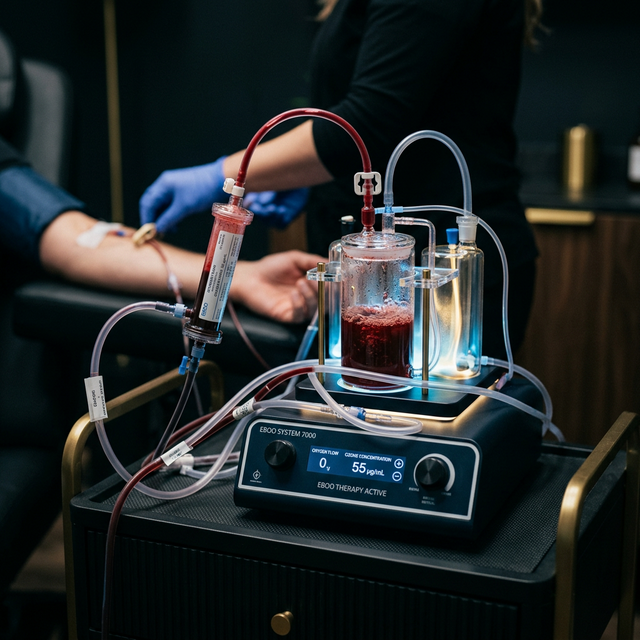
EBOO (Extracorporeal Blood Oxygenation and Ozonation)
The most advanced systemic method — uses an external circuit to treat 40-60% of blood volume per session. Discussed in detail at: What Is EBOO Therapy? A Complete Introduction and EBOO vs. Ozone Therapy: Which Is Right for You?
What NOT to Do: Direct IV Gas Injection (Dangerous — Historical Method)
Some historical practitioners administered ozone gas directly into a vein without pre-mixing with blood. This is absolutely dangerous and obsolete — it carries an extreme risk of fatal gas embolism. No legitimate ozone therapy practitioner uses this method. If any provider offers direct IV ozone gas injection, leave immediately.
Where Is Ozone Therapy Supported by Clinical Evidence?
| Application | Evidence Level | Key Studies |
|---|---|---|
| Knee osteoarthritis (intra-articular) | Strong | Meta-analysis of 8 RCTs, 2018; multiple individual RCTs |
| Diabetic foot ulcers (topical) | Strong | Multiple systematic reviews; Advances in Wound Care 2019 |
| Herniated disc / radiculopathy | Moderate-Strong | Multiple Italian and Spanish RCTs |
| Dental caries and periodontitis | Excellent | Multiple RCTs; Rickard et al., 2004 and subsequent |
| Peripheral arterial disease (MAH) | Moderate | European and Cuban clinical series |
| Chronic Hepatitis B/C (MAH adjunct) | Moderate | CENIC Cuba; non-randomized |
| Chronic fatigue (MAH) | Preliminary | Small controlled studies |
| COVID-19 adjunct | Preliminary | Small Italian hospital series; no large RCTs |
Safety: Key Facts About Ozone Therapy
General safety profile: A German safety survey covering 384,775 ozone treatments (Jacobs, 1982) reported a complication rate of approximately 0.0007% — 7 per million sessions — with no fatalities from correctly administered autohemotherapy. Dental ozone and topical applications have excellent safety records.
Absolute contraindications:
- G6PD deficiency — mandatory pre-screening for ALL ozone therapies
- Active hemorrhage or severe bleeding disorders
- Pregnancy
- Uncontrolled hyperthyroidism
- Acute myocardial infarction (within 3-6 months)
- Severe thrombocytopenia (platelets < 50,000)
- Ozone hypersensitivity
- Severe anemia (Hb < 7 g/dL)
Critical drug interactions:
- High-dose antioxidants (vitamin C, E) taken immediately before ozone therapy may blunt the therapeutic oxidative signal — avoid 4-6 hours before and 2 hours after
- Anticoagulants: additive bleeding risk — requires monitoring
- Immunosuppressants: ozone's immune-stimulatory effects may counteract them
For a complete safety overview: IV Therapy Safety: Risks, Contraindications, and What to Ask
Is Ozone Therapy Regulated?
United States: The FDA has not approved ozone as a drug or medical device for therapeutic use. It occupies a legal gray zone — licensed physicians and naturopathic doctors (in states with ND licensure) may offer it under their practice authority. The American Academy of Ozonotherapy (AAO) sets domestic training and safety standards.
Europe: Practiced legally in Germany, Italy, Spain, and other EU countries as complementary medicine. CE-marked equipment is required. Not typically covered by statutory health insurance.
Cuba: Most institutionally integrated in the world — available in public hospitals for specific indications under the national health system.
Russia: Officially recognized by the Russian Ministry of Health; available in public and private settings.
The Bottom Line: What Is Ozone Therapy?
Medical ozone therapy is a family of treatments — not a single intervention — using precisely controlled ozone-oxygen mixtures to activate the body's own antioxidant and healing pathways. The science behind how it works is well-characterized. The evidence for specific applications is strongest in orthopedics, wound care, and dentistry, and more preliminary for systemic uses like chronic fatigue and immune support.
The most important practical takeaways:
- G6PD testing is non-negotiable before any ozone treatment
- Seek practitioners certified by the AAO or equivalent international body
- Match the delivery method to the clinical indication — no one method is universally best
- Approach ozone as an adjunctive therapy, not a standalone cure
Related reading:
- Ozone Therapy Benefits and Risks: The Evidence-Based Review
- Major Autohemotherapy: The Complete Patient Guide
- EBOO vs. Ozone Therapy: Which Is Right for You?
- IV Therapy and Advanced Wellness Treatments: The Complete Guide
This article is for educational purposes only. Ozone therapy is not FDA-approved. Always consult a licensed healthcare provider before starting any ozone-based treatment.