"Toxic load" is one of those phrases that gets used so loosely online that it has almost stopped meaning anything. Supplement brands use it to sell detox teas. Wellness accounts use it to explain every symptom from tiredness to dull skin. That is a shame, because underneath the marketing there is a real and useful clinical idea, and it is worth being precise about it.
In this article we define toxic load the way we use it in clinic: the combined burden of environmental exposures, metabolic by-products and inflammatory mediators that the body is carrying, relative to its capacity to clear them. We then cover the symptoms people actually report, what drives the load up in a city like London or Glasgow, the measurements that genuinely exist, and the honest limits of all of them. If you want to gauge your own load quickly, our 3-minute EBOO assessment uses a four-dimension scoring model we explain below.
Disclaimer: This article is for educational purposes only and does not constitute medical advice. Every symptom described here has common alternative causes that a doctor should exclude first. Nothing in this article replaces a consultation.
What Toxic Load Means (and What It Does Not)
It helps to separate three ideas that usually get bundled together.
Body burden is the measurable concentration of specific chemicals in your tissues or blood: heavy metals such as lead, mercury and cadmium, persistent organic pollutants, plasticisers, and so on. This is a real, quantifiable thing. It is also, for most urban adults, low enough that it does not explain their symptoms on its own.
Oxidative stress is the imbalance between reactive oxygen species and your antioxidant capacity to neutralise them. It rises with pollution exposure, alcohol, poor sleep, intense training, infection and psychological stress. It is measurable, though the markers are specialist and not routinely run.
Inflammatory load is the level of circulating inflammatory mediators, and the low-grade, persistent version of it is what most people are actually describing when they say they feel "toxic". This is the most clinically useful of the three, because it is cheap to measure and it tracks with symptoms.
What toxic load is not: a single number, a diagnosis, or something a hair test or a foot pad can tell you. There is no single "toxic load test". What there is, is a set of markers and a structured history that together give a doctor a useful read.
Symptoms People Report
The symptoms below are grouped the way our assessment groups them. Every one of them also has common, ordinary causes. A doctor will look for those first, because thyroid disease, iron deficiency, sleep apnoea, depression and a dozen other things produce the same picture and are treated differently.
Energy and cognition
- Persistent fatigue that survives a full night's sleep
- Brain fog, word-finding pauses, difficulty holding a thread of thought
- Low mood or low motivation without an obvious trigger
Musculoskeletal and skin
- Joint or muscle pain without an injury to explain it
- Recurrent breakouts, eczema or psoriasis flares, generally "reactive" skin
- Puffiness or a heavy feeling, particularly in the morning
Gut and sleep
- Bloating, irregular bowel habit and IBS-type symptoms
- Sleep that is long enough on the clock but does not restore
- Waking between 2am and 4am without a clear cause
Recovery
- Slow bounce-back from training, from a cold, or from a stressful week
- Needing longer rest days than you used to
- Getting ill more often, or taking longer to shake illness off
The pattern matters far more than any single item. One symptom is noise. Five or six from across the groups, persisting for months, is a signal worth investigating properly.
What Drives It in a City
London and Glasgow are not unusual among large cities, but they are cities, and city living has a measurable effect on oxidative and inflammatory load. This is why our assessment assumes environmental exposure at maximum for every patient rather than asking about it.
| Driver | Mechanism | Practical lever |
|---|---|---|
| Outdoor air (PM2.5, NO2) | Fine particulates cross into the bloodstream and drive systemic inflammation; NO2 irritates airways | Route choice away from main roads, exercise timing, awareness of high-pollution days |
| Indoor air | Cooking fumes, cleaning products, poorly ventilated flats concentrate volatile compounds | Ventilation, a HEPA filter in the bedroom, extraction when cooking |
| Water contaminants | Trace pharmaceuticals, microplastics and disinfection by-products | A certified filter; not a reason for panic, but a cheap lever |
| Alcohol | Direct oxidative stress on the liver, disrupted sleep architecture, gut permeability | Frequency more than quantity; alcohol-free stretches |
| Ultra-processed food | Low fibre, high emulsifier and additive load, blood-sugar swings that promote inflammation | Fibre, protein, whole foods; not perfection, direction |
| Short or fragmented sleep | Impaired glymphatic clearance in the brain, raised inflammatory markers after even a few short nights | Consistent timing, darkness, caffeine cut-off |
| Shift work and travel | Circadian disruption that raises cortisol and inflammatory markers | Anchor sleep, light exposure timing, recovery days |
| Chronic stress | Sustained cortisol and sympathetic drive, which raises oxidative load and suppresses repair | This is the hardest one; it is also the one with the most leverage |
None of these is exotic and none of them individually explains a symptom cluster. Together, over years, they add up. That accumulation is the "load".
How It Is Actually Measured
This is where we get precise, because the gap between what is claimed and what can be measured is where most of the bad advice lives.
Routine blood markers a doctor will use
- hs-CRP and ESR. The most useful and the cheapest. Persistently raised hs-CRP in the 1 to 10 mg/L range, with no acute illness, is the signature of low-grade inflammation.
- Ferritin. An iron store, but also an acute-phase reactant. High ferritin with normal iron can be an inflammation signal.
- Liver enzymes (ALT, AST, GGT). GGT in particular tracks with oxidative stress and alcohol load.
- HbA1c and fasting glucose. Metabolic load and inflammation travel together.
- Vitamin D. Low levels are common in UK cities and are associated with higher inflammatory markers.
- Full blood count. White cell pattern and red cell indices give context.
Specialist tests and their limits
Heavy-metal panels are worth running when there is a plausible exposure history, not as a routine screen. Oxidative stress markers such as 8-OHdG (a marker of DNA oxidation) and F2-isoprostanes (lipid peroxidation) exist and are used in research, but they are expensive, variable, and hard to act on for an individual. We do not recommend paying for them without a doctor who can interpret them. Hair mineral analysis and similar are not diagnostic and we do not use them.
Questionnaires and scoring models
Because there is no single test, structured questionnaires have a role, and that is exactly what our assessment is. It scores four dimensions with the following weights:
- Environment (40%), assumed at maximum for London and Glasgow patients
- Lifestyle (25%), combining diet, alcohol and sleep into a single pace rating
- Symptoms (25%), weighted by how strongly each correlates with inflammatory load
- Age (10%), because accumulated exposure scales with time
The result is a 0 to 100 score in one of four bands: light, moderate, heavy or critical. It is a screening score, not a lab result. What it is good for is turning a vague sense of "I don't feel right" into a structured summary a doctor can work from, and telling you whether a blood panel is the sensible next step. You can take it here.
How to Reduce Toxic Load: What Has Evidence
The unglamorous answer is that the levers with the strongest evidence are the ones in the table above: sleep, alcohol, air quality, fibre and hydration, resistance training and stress load. Sleep alone moves hs-CRP measurably within weeks. These are not optional foundations that clinical support replaces. They are the base that clinical support sits on.
Where clinical support fits:
- IV nutrient support can correct specific deficiencies faster than oral routes when absorption is compromised. See The Complete Guide to IV Therapy for what is and is not supported.
- Glutathione is the body's principal intracellular antioxidant and is depleted by oxidative load. Glutathione IV is one route to replenishing it.
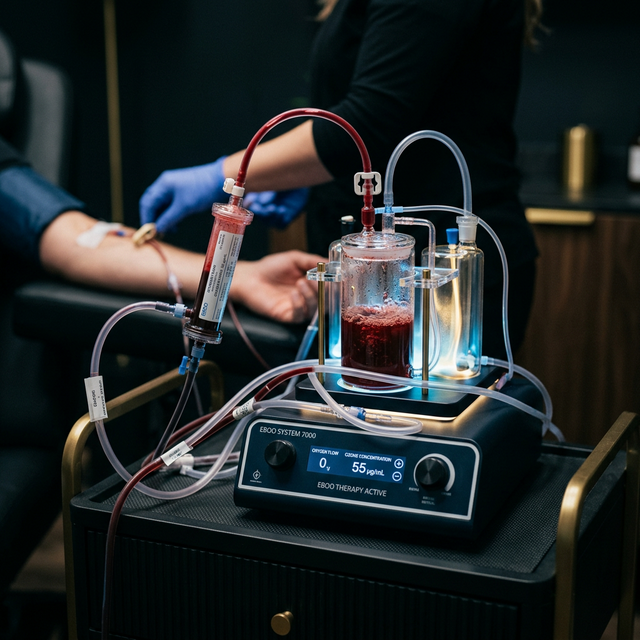
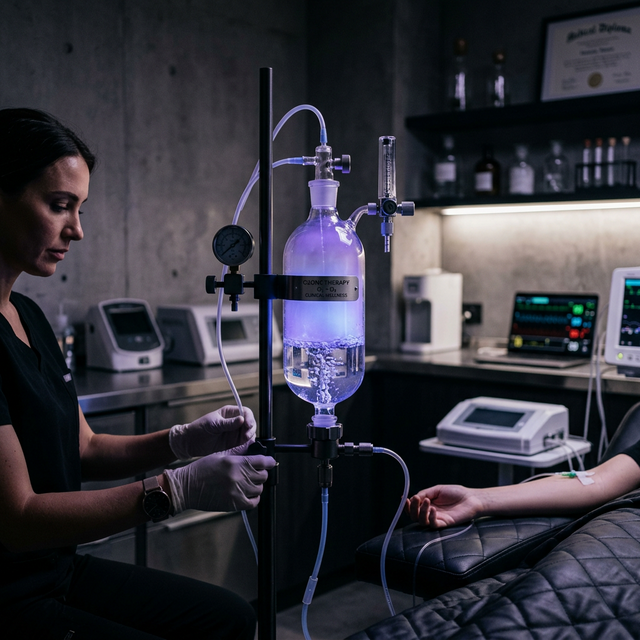
- EBOO addresses inflammatory and oxidative load directly: filtration removes circulating mediators, and ozonation is proposed to stimulate the body's own antioxidant enzyme systems. It is the intervention we consider for people with a heavy inflammatory pattern, high exposure history, and no contraindications. It is not appropriate for people with G6PD deficiency, in pregnancy, or on anticoagulants without a doctor's review. What Is EBOO Therapy? explains the mechanism, and Am I a Candidate for EBOO? walks through who it suits.
Whatever the intervention, measure first. A baseline hs-CRP and a symptom score you can repeat make the difference between "I think I feel better" and "the number moved".
When to See a Doctor Rather Than Self-Manage
Toxic load is a useful framework for persistent, low-grade symptoms. It is the wrong framework for red flags. See a doctor promptly, and do not wait for a wellness consultation, if you have unexplained weight loss, night sweats, a persistent fever, blood in your stool, chest pain, new neurological symptoms, or a symptom that is getting steadily worse rather than staying flat. Those need diagnosis, not detoxification. For a sense of who wellness interventions do and do not suit, Who Should (and Shouldn't) Get IV Therapy? is a useful reference.
The Bottom Line
Toxic load is real, but it is not one thing and it is not one test. It is the combined weight of exposure, oxidative stress and inflammatory mediators against your capacity to clear them, and the useful measurements are ordinary blood markers plus a structured history. The symptoms people report cluster around energy, cognition, joints and skin, gut and sleep, and recovery. City living raises the baseline. The strongest levers are the boring ones. Clinical interventions, including EBOO, are a layer on top of that for people whose pattern warrants it and whose blood tests support it. Measure first, then decide.
Related reading:
- Am I a Candidate for EBOO Therapy? A Doctor's Checklist
- What Is EBOO Therapy? A Complete Introduction
- EBOO Therapy Benefits: What the Research Actually Says
- IV Therapy and Advanced Wellness Treatments: The Complete Guide
- Who Should (and Shouldn't) Get IV Therapy?
This article is for educational purposes only and does not constitute medical advice. Always consult a GMC-registered doctor before starting any IV, ozone or extracorporeal treatment.